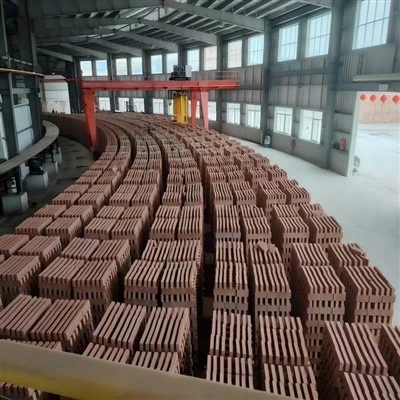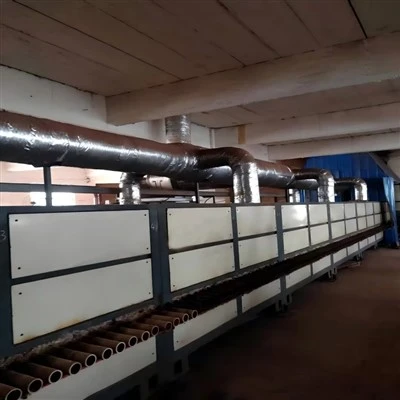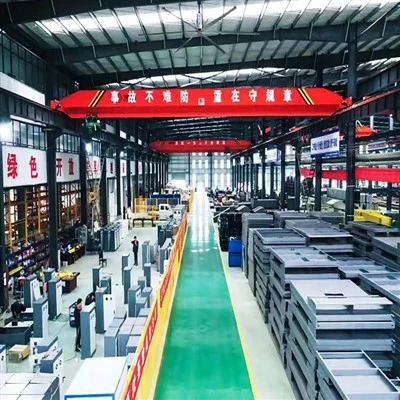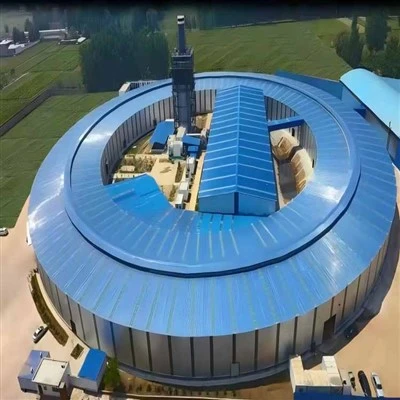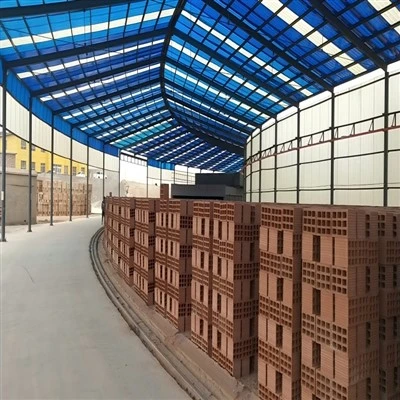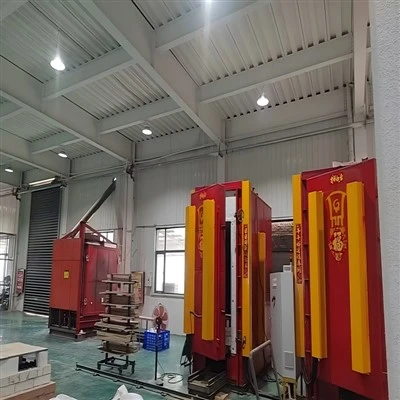

Direct-flame tunnel kiln: The flame travels directly from the kiln head to the kiln tail, resembling a straight highway of flame. This type of kiln offers good temperature uniformity and is particularly suitable for sintering regularly shaped bricks, tiles, and refractory materials. The operating temperature is typically maintained in the range of 1000-1300℃, with the kiln car advancing at a speed of approximately 1-2 meters per hour. Because the hot airflow moves in the same direction as the product, it reduces the formation of surface cracks.
Side-flame tunnel kiln: A unique design with two flames attacking from both sides, creating a symmetrical heating pattern. Primarily used for ceramic glazing and processing special materials, the burners on both sides can be independently temperature-controlled, achieving precise lateral temperature gradient adjustment. Its biggest advantage is its ability to handle ultra-large cross-section products up to 3 meters wide, with thermal efficiency approximately 20% higher than the direct-flame type. However, the kiln's steel structure requires special reinforcement.
Top-flame and ring-flame kilns: Top-flame kilns: The flame penetrates the material stack from top to bottom, suitable for multi-layered honeycomb ceramics and other products. Unique downward-pressurized heat flow reduces product deformation; a multi-stage heat recovery system can be installed in the preheating zone.
Ring flame type: The flame surrounds the product in a ring shape, commonly used in the sintering of special ceramics. Its 360-degree uniform heating characteristic significantly improves its yield, but it requires complex refractory material combinations during construction and has higher maintenance costs.