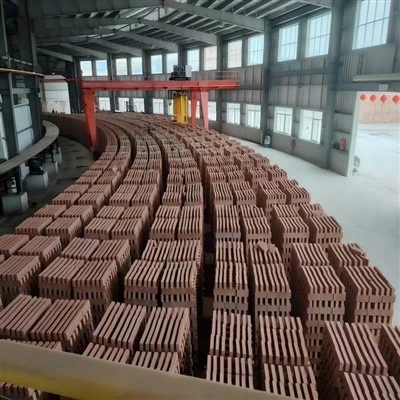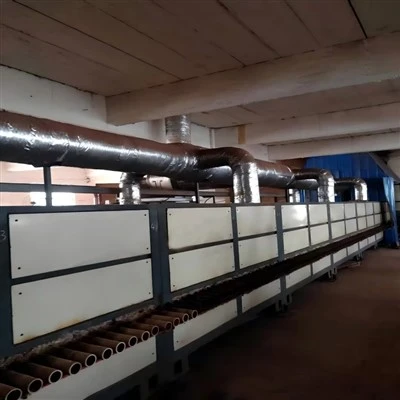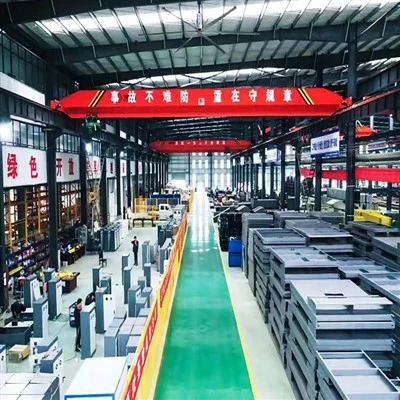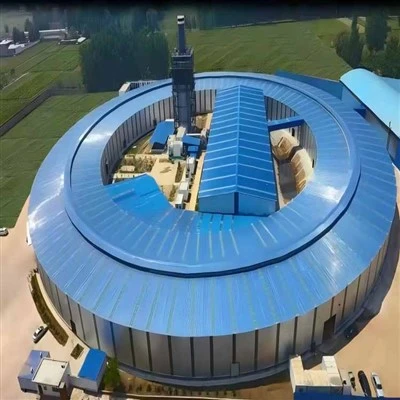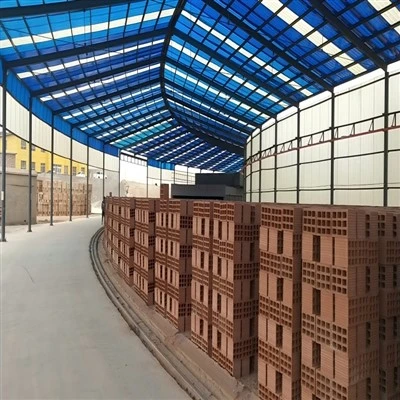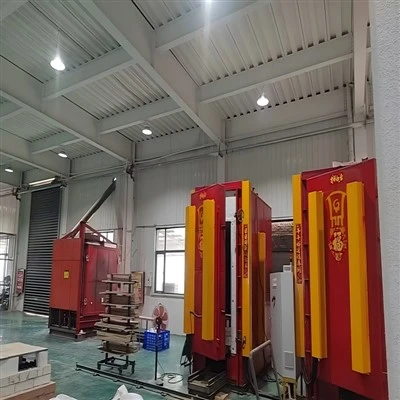

1. Tunnel kilns offer continuous production, short cycle times, high output, and high quality.
2. They operate on a counter-current principle, resulting in high heat utilization and fuel economy. Excellent insulation and waste heat utilization lead to significant fuel savings, approximately 50-60% compared to downdraft kilns.
3. Reduced firing time. While a conventional kiln takes 3-5 days from loading to unloading, a tunnel kiln can complete the process in about 20 hours.
4. Labor savings. Operation is convenient during firing, and loading and unloading are done outside the kiln, improving working conditions and reducing labor intensity.
5. Improved quality. The temperatures in the preheating, firing, and cooling zones are consistently maintained within a defined range, making it easier to control the firing process, resulting in better quality and lower damage rates.
6. Durable kilns and kiln furniture. Because tunnel kilns are unaffected by rapid heating and cooling, the kiln body has a long service life, typically requiring repairs only every 5-7 years. However, tunnel kiln construction requires substantial materials and equipment, resulting in a larger initial investment. Because it's a continuous firing kiln, the firing regime shouldn't be changed arbitrarily. It's generally only suitable for mass production and products with essentially the same firing regime requirements, offering limited flexibility.
Refractory material tunnel kilns can be divided into three categories based on their operating temperature. Let's take a brief look:
1) Low-temperature tunnel kiln: Firing temperature around 1000°C, mainly used for firing products with special process requirements, such as slide block bricks.
2) Medium-temperature tunnel kiln: Firing temperature 1300~1650°C, mainly used for firing ordinary basic bricks, clay bricks, high-alumina bricks, slide block bricks, sprue bricks, silica bricks, etc.
3) High-temperature tunnel kiln: Firing temperature above 1700°C, generally between 1800-1900°C. Mainly used for firing mid-range magnesia bricks, high-purity magnesia bricks, direct-bonded magnesia-chrome bricks, magnesia-alumina and corundum products. Some people also classify products by name, as different products have different firing processes, and the length and height of the kiln also vary. For example, a tunnel kiln for silica bricks is generally 150m to 180m long, and the height from the lathe bed to the top of the kiln is 1.6m to 1.9m. A typical brick-built tunnel kiln is 80m to 100m long, and the height from the top of the lathe bed to the top of the kiln is 1m.